
Case Study: Introducing “Vacation Mode” to Duolingo
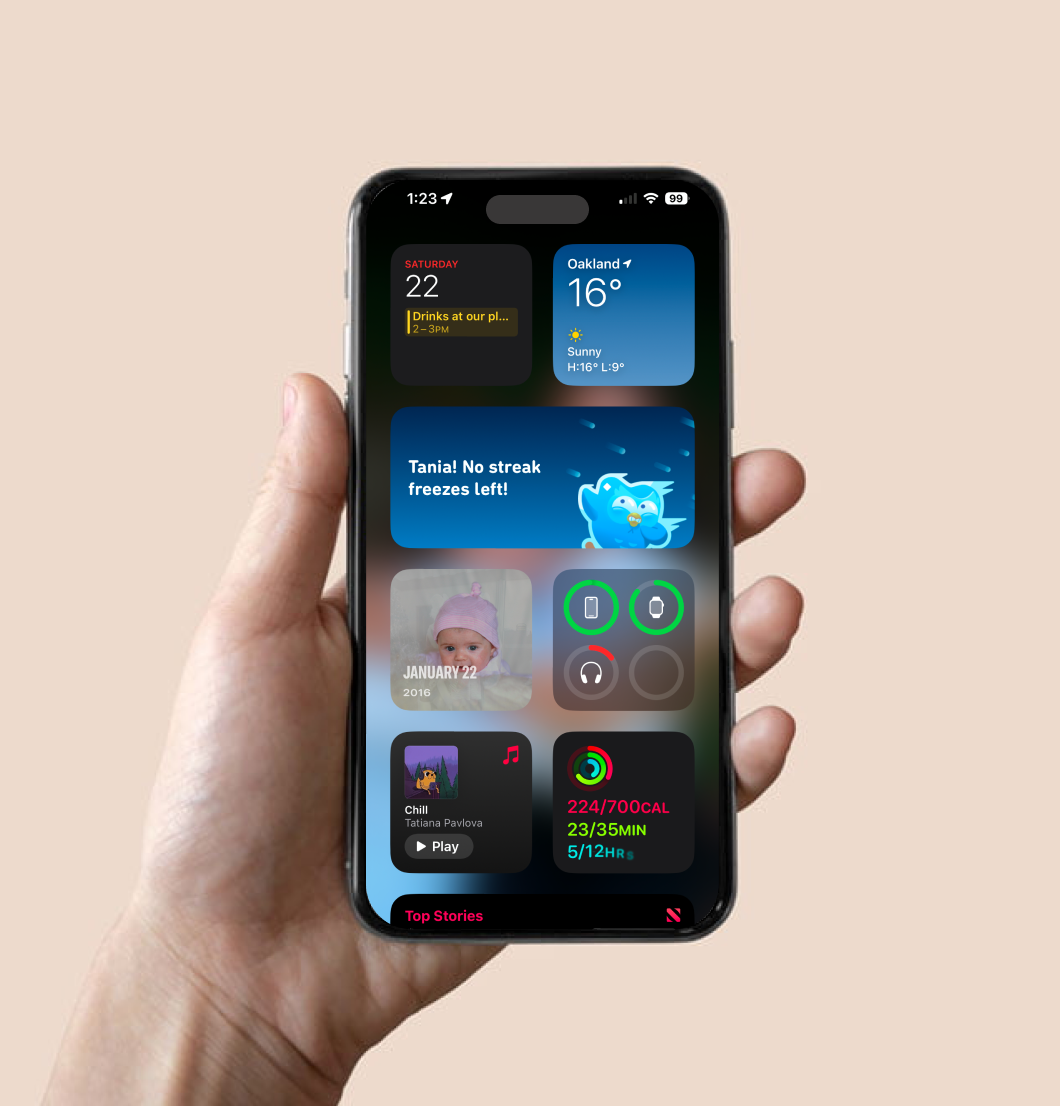
Streaks are one of Duolingo’s most powerful habits and motivators — but they can also be a major source of stress. Many long-time users lose their streaks due to travel, holidays, time zone changes, or lack of internet, and the emotional impact is often strong enough to make them stop using the app for months. My goal was to design a feature that allows users to take a legitimate break without feeling punished and without undermining the behavioral intent behind streaks.
My Role & Timeline
Role: End-to-end Product Designer (UX Research → Interaction Design → UI → Testing → Prototype)
Duration: 2 weeks
Type: Solo project within an established, recognizable product ecosystem
Because Duolingo’s design system is iconic and user expectations are high, a major part of the challenge was matching the existing visual language as closely as possible.
1. Problem
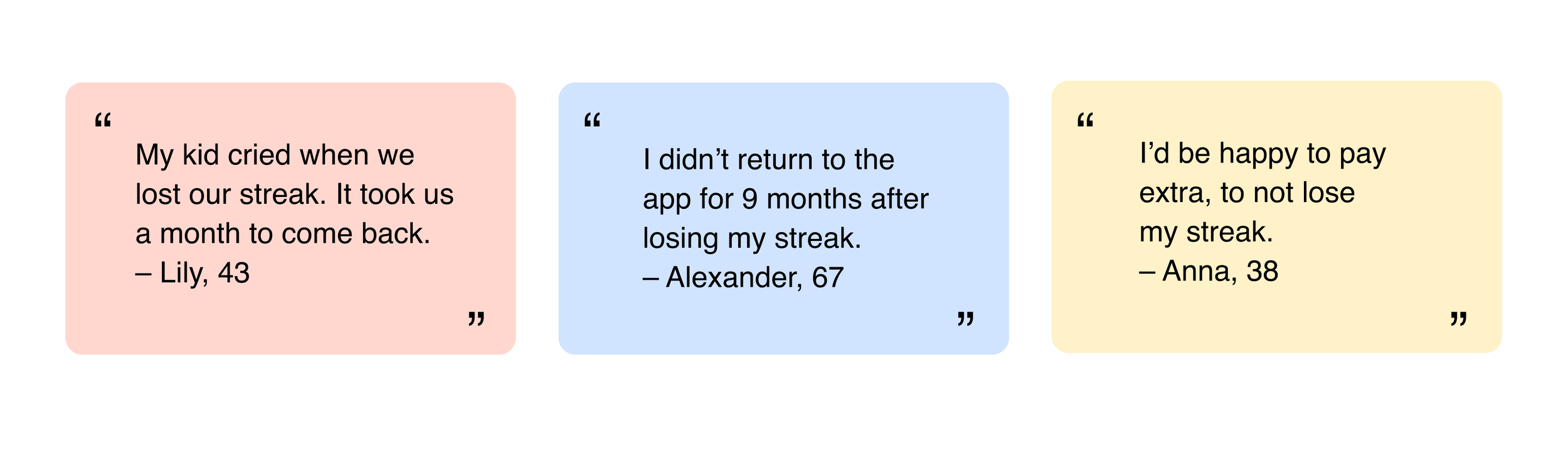
The Emotional Cost of Losing a Streak. All interviewed users reported that losing a streak was extremely upsetting — often more upsetting than they expected. This discouragement sometimes caused them to stop using the app for weeks or even months.
Duolingo is normally uplifting and encouraging. The pain of losing a streak disrupts that experience and contradicts the app’s positive emotional tone. Users wanted a way to preserve their streaks for legitimate reasons — travel, family events, holidays, or moments when daily learning becomes unrealistic.
2. Research
Participants
6 users, ages 10–67
Students, professionals, parents, and a retiree
Streak lengths: from 69 to 770 days
Research Goals
Understand how losing a streak affects motivation
Explore reaction to a streak-pausing feature
Identify ideal duration, frequency, and limitations
UX Research Summary_ Vacation M…
Key Insights
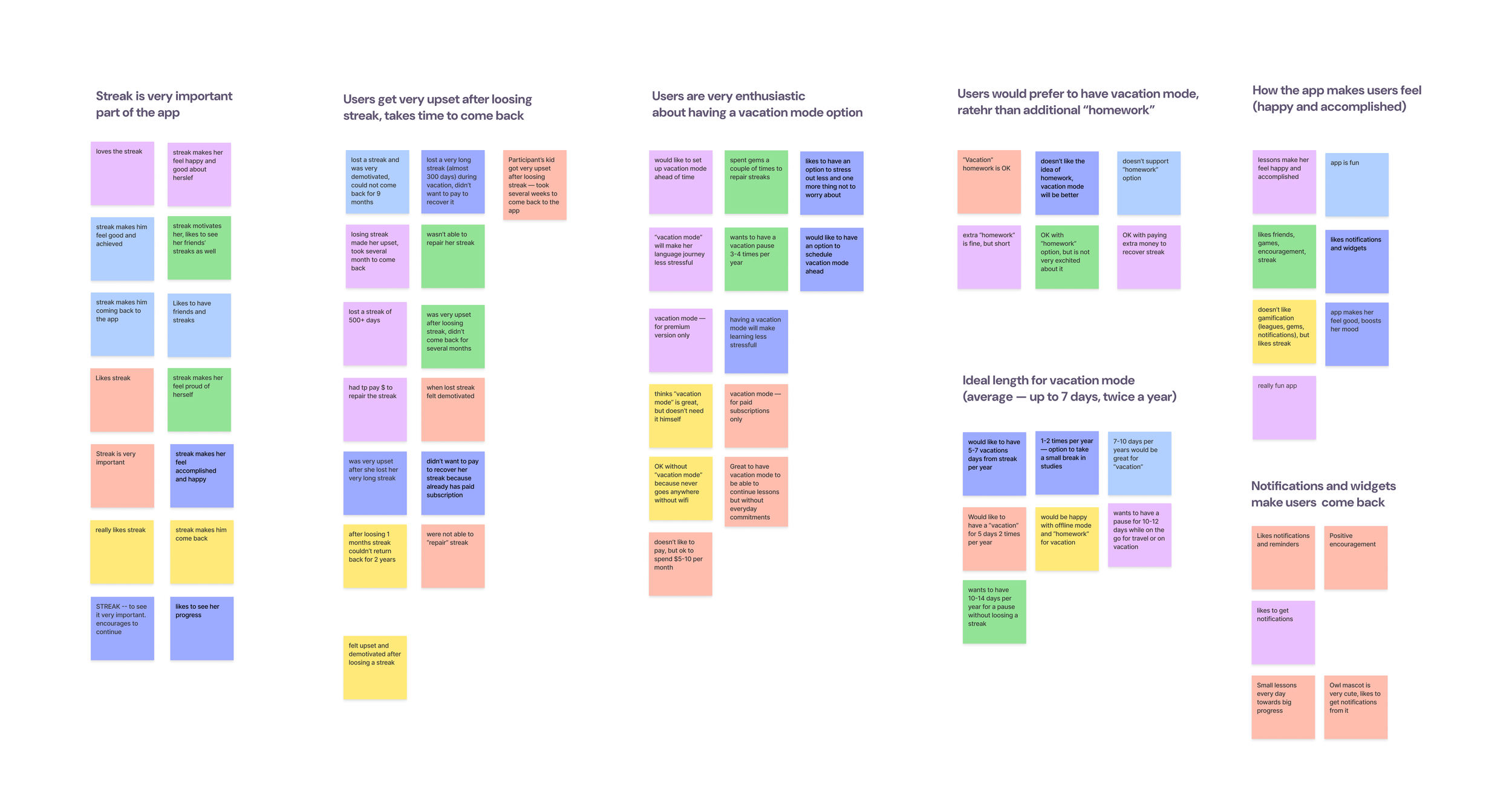
Streaks are deeply meaningful. They symbolize consistency and progress.
Losing a streak is demoralizing and often causes long periods of disengagement.
100% of participants supported a Vacation Mode, saying it would reduce stress and encourage long-term use.
Ideal allowance: 5–10 break days per year, used in 1–3 occasions.
Several users suggested making it a Premium feature.
Users wanted the ability to schedule breaks in advance or handle offline scenarios.
UX Research Summary_ Vacation M…
Unexpected Finding: The intensity of the emotional reaction surprised me, especially how strongly users of very different ages (10 to 69) felt about streak loss.
3. Project Goals
Based on research themes, the feature needed to:
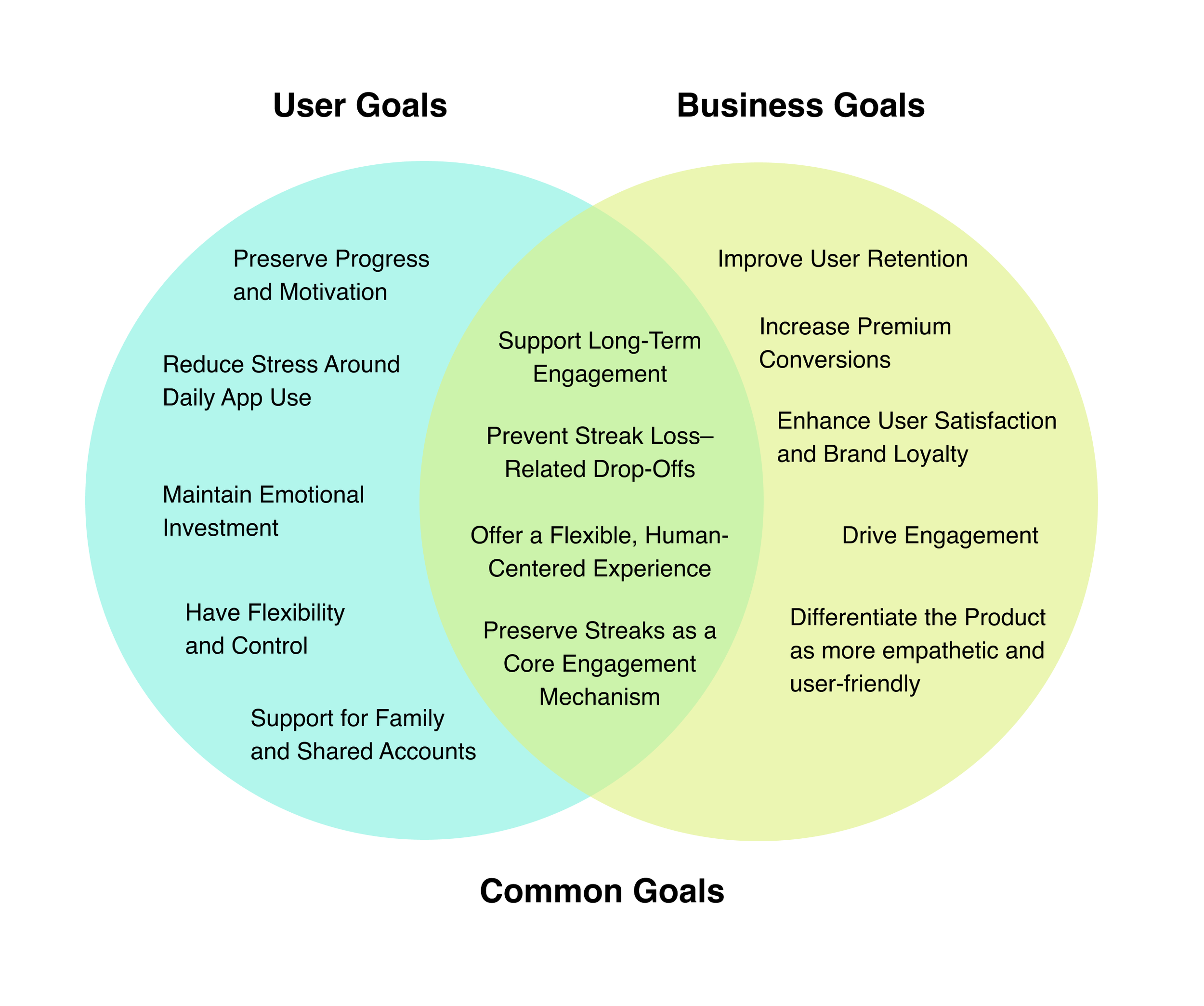
Preserve streaks fairly for legitimate breaks
Maintain Duolingo’s motivational philosophy
Feel seamless within the existing design language
Add clarity without adding complexity
Support advance scheduling and offline scenarios
I aimed to design a solution that reduces anxiety while preserving the spirit of commitment that streaks promote.
4. Concept: “Vacation Mode”
Vacation Mode lets users schedule a limited number of “pause days” per year (5–10 days based on research) during which their streak remains protected. It is intended to:
Reduce stress around travel
Prevent accidental streak loss
Support long-term retention
Encourage continued engagement
Why It Matters: users repeatedly described this feature as something that would make their “language journey less stressful.”
5. Design Process
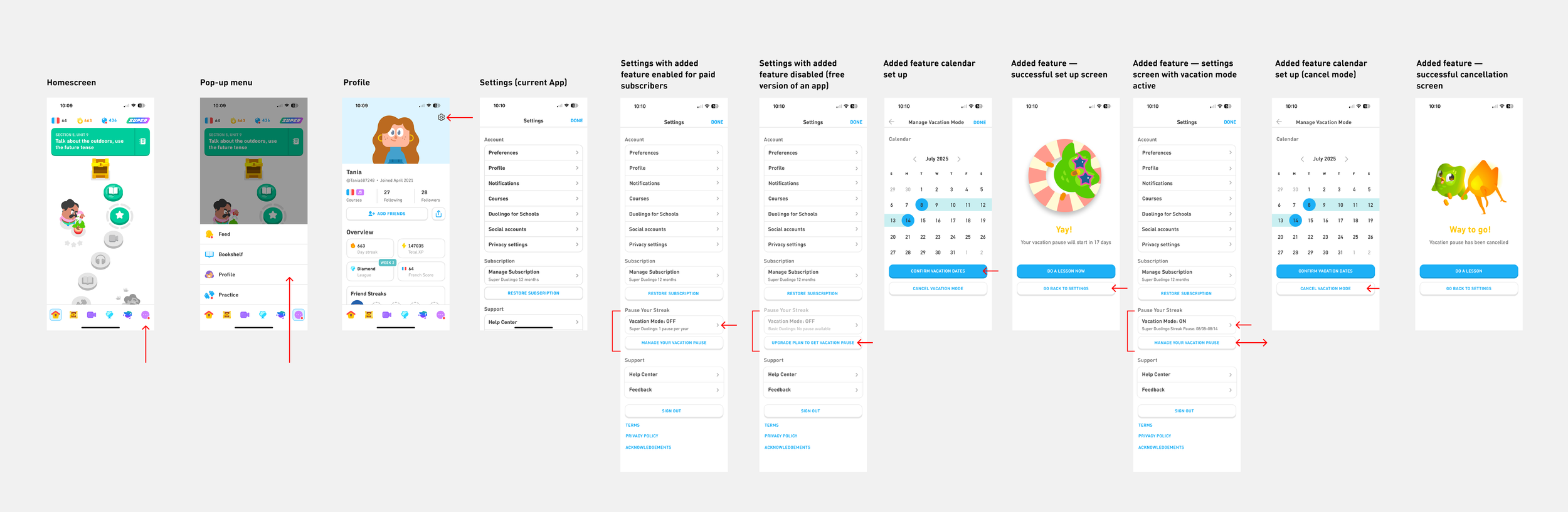
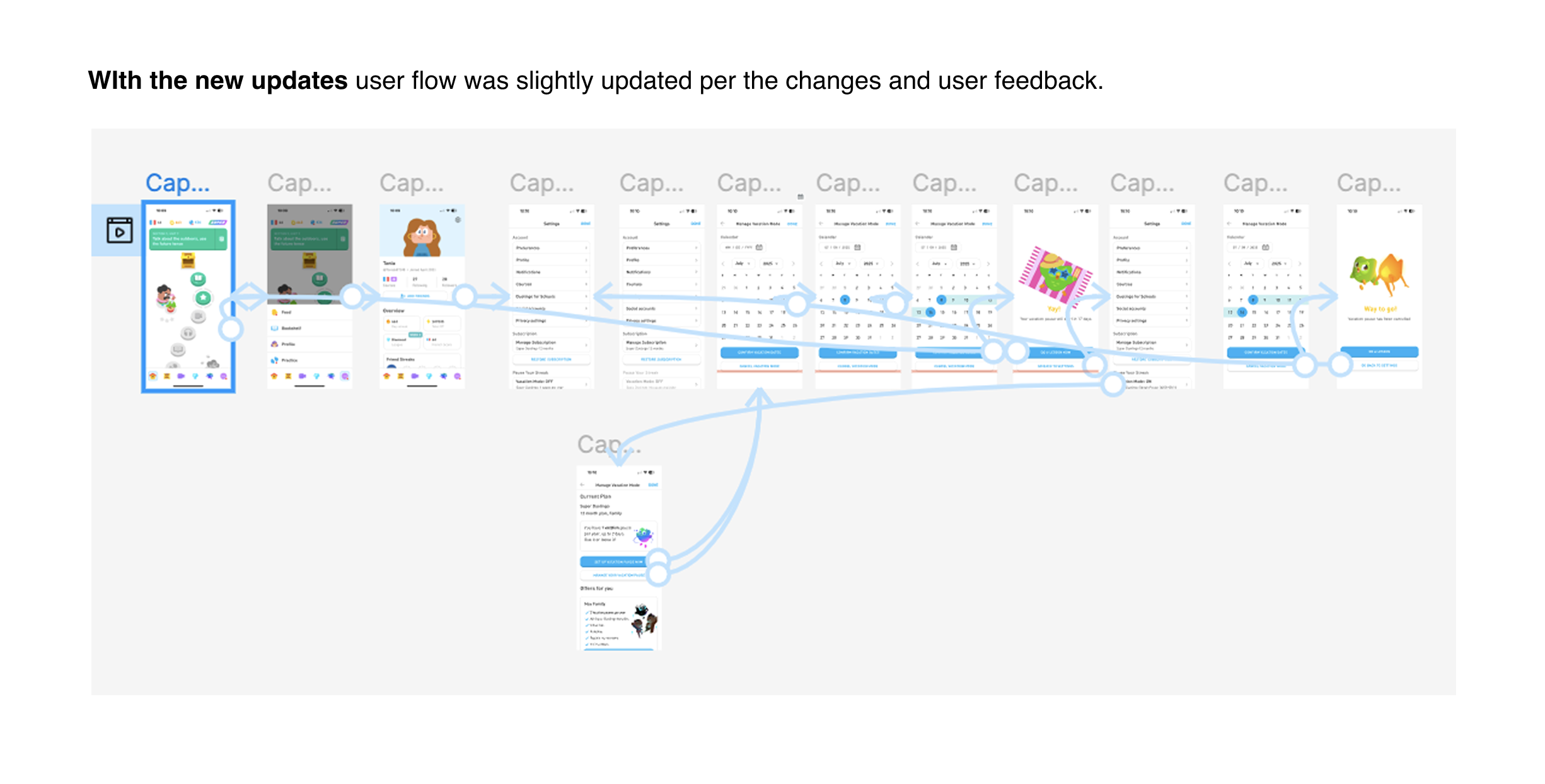
Interaction design. Because Duolingo has an iconic interface, maintaining fidelity to its patterns was essential. My design decisions focused on accessibility, clarity, and fitting naturally into existing navigation
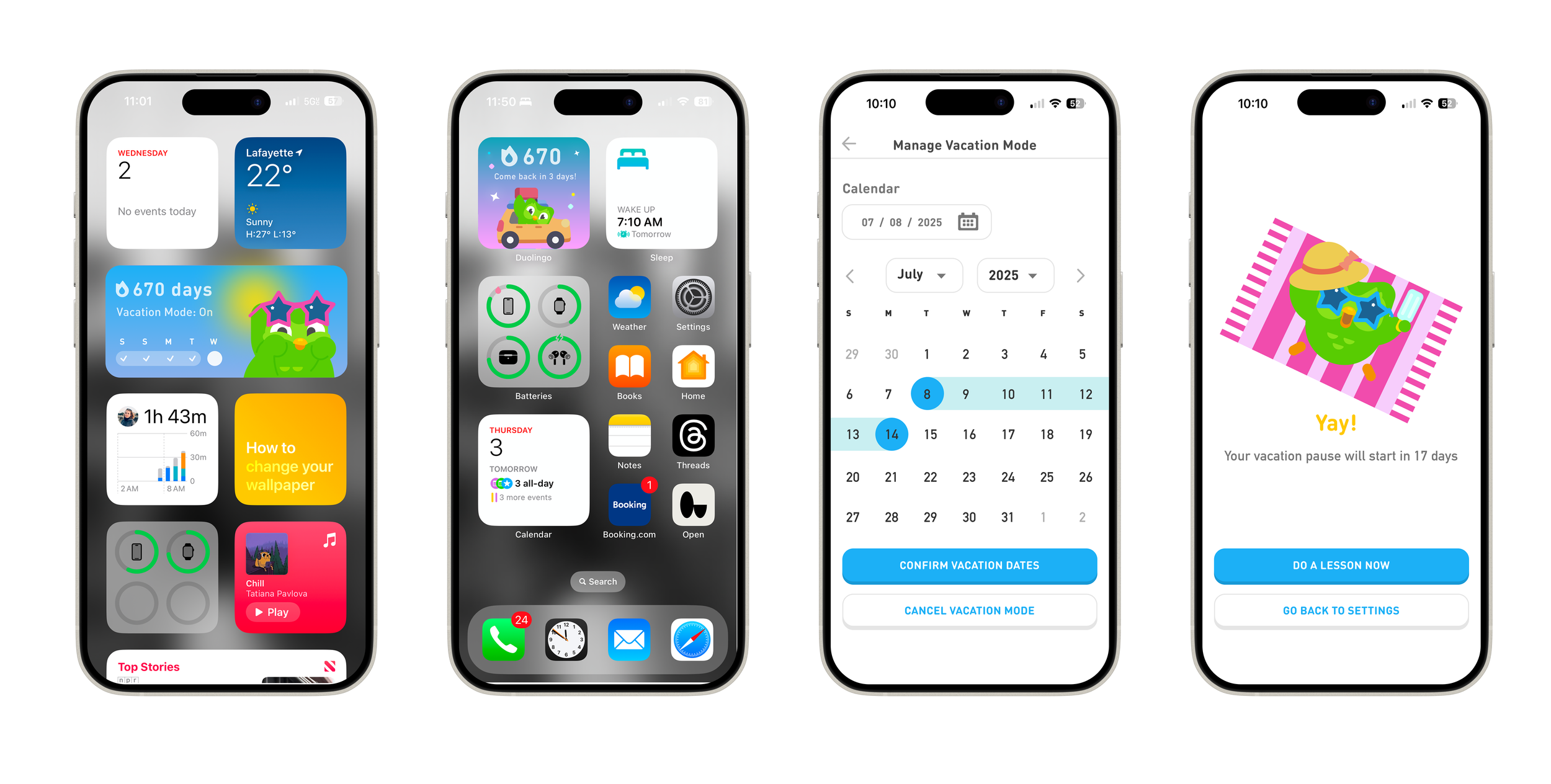
Visual Exploration. A highlight of the project was designing new illustrations featuring Duo, the beloved mascot. Users reacted positively to playful widgets accompanying the feature.
User Testing
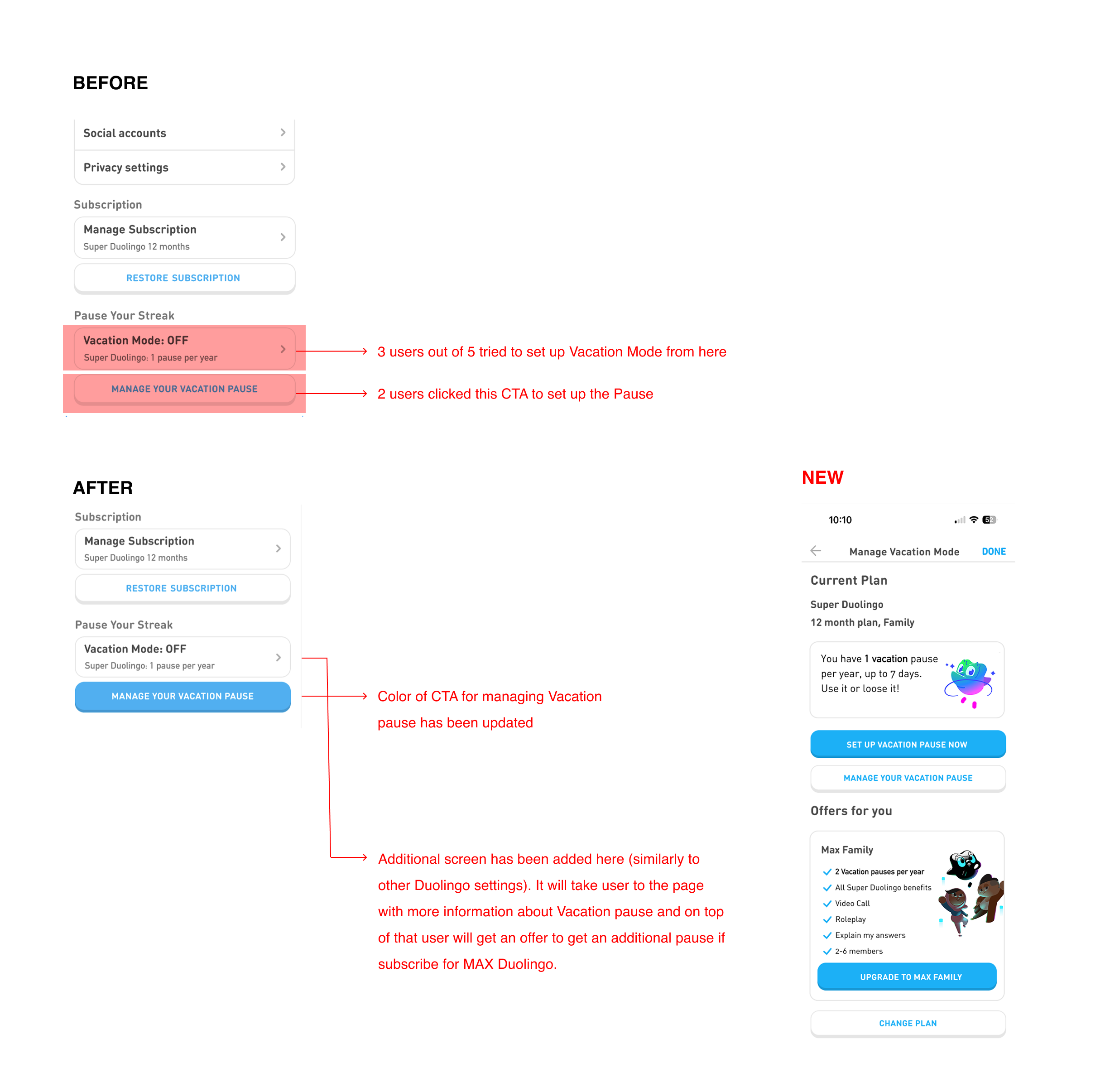
A simple step for setting up a pause, that I assumed would be “intuitive”, failed for more than half of my testers, reminding me how crucial real-world observation is. Iteration based on testing feedback improved the flow significantly. Testing participants ranged from 10 to 69 years old, giving me valuable insight into how different age groups interpret the same UI.
6. Outcomes
User Response
Participants strongly supported the feature, saying it would:
Reduce stress
Encourage consistent long-term use
Make the app feel more supportive
Better align with real-life needs
Several expressed willingness to either pay extra for the ability to preserve their streaks or to upgrade for a better plan that will allow them to take a break.
Business Value
Research suggests that Vacation Mode could increase:
Retention (fewer users quitting after streak loss)
Engagement consistency
Premium conversion through a highly desirable, emotionally meaningful feature
7. Reflections and Learnings
This project taught me the value of real user testing, especially for established products where assumptions feel “obvious.” Observing frustration, confusion, and moments of delight firsthand was the most transformative part of the process.
I also learned the importance of designing for a diverse range of ages and abilities. Seeing how a 10-year-old and a 69-year-old approach the same task helped shape a more accessible experience.